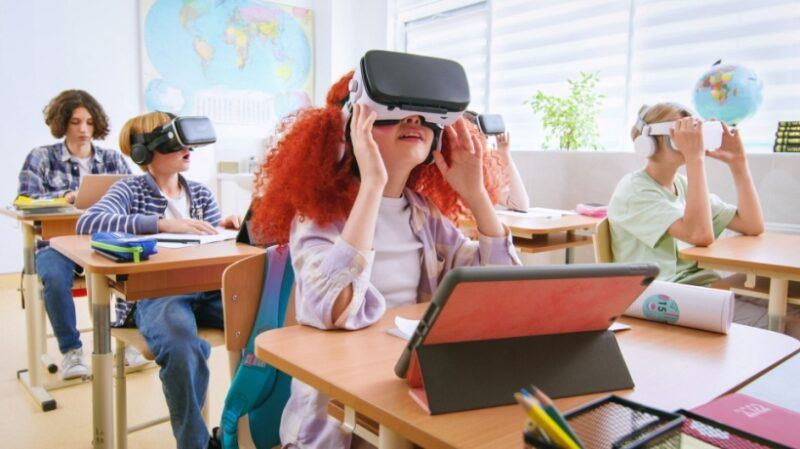
The Function Of Immersive Technologies In eLearning
Immersive innovations are transforming how individuals find out. In eLearning, immersive modern technology consists of all the devices and experiences that surpass screens and fixed material. You may think about Online and Augmented Fact (VR/AR), and you’re right, however there are much more, such as Mixed Reality (MR) or AI-driven simulations. All these innovations pull learners into interactive, 3 D settings where they can practice, explore, and involve with product in a genuine way. Instead of simply reviewing a book or enjoying a video, students can go through an online manufacturing facility, deal with an electronic version of machinery, or technique abilities like settlement or public talking with practical characters.
This modification is considerable. For learners, training comes to be a lot more interesting and remarkable because they actively take part as opposed to simply soaking up info. This creates retention rates to boost as the brain keeps in mind experiences better than message. Immersive atmospheres also allow students to attempt and make blunders without real-life dangers or expenses. As an example, clinical students can practice surgery without hurting a client, and brand-new hires can explore a firm’s workflow prior to making use of real devices. So, we might claim that immersive innovation connects theory with method in a way that conventional eLearning can not.
Organizations likewise profit substantially. As opposed to investing money on training costs such as facilities and transportation, they can provide digital training that benefits teams anywhere. This conserves expenses and ensures consistent training. Additionally, with AI and analytics in these platforms, business can collect important data on student interactions, emphasize strengths, and determine areas where staff members require assistance. This details helps improve training programs and construct stronger labor force skills. Overall, immersive modern technologies are greater than just patterns. They demonstrate how education and specialist training are constantly boosting to supply and create experiences that are much more engaging and effective. Let’s explore some prominent immersive technology in eLearning, in addition to what you must take into consideration before implementing it.
6 Key Immersive Tech Trends In eLearning
1 Virtual And Augmented Truth
Virtual Reality and Augmented Fact make finding out more interesting by turning abstract ideas into hands-on experiences. With virtual reality, learners can get in immersive settings, not just fundamental simulations. For example, they can use a headset and stroll into a virtual chemistry lab, where they can experiment without any threat. This provides a safe area to exercise choosing under stress. AR, on the other hand, includes digital components to the real life, making learning interactive in an unique way. Rather than reviewing from books, pupils can explore AR holograms that bring historic events, scientific models, or even makers to life precisely their workdesks. AR likewise advertises teamwork by enabling teams to construct and change 3 D models together in genuine time, linking classroom lessons to real-world applications.
Both innovations offer terrific advantages. Virtual reality permits students to exercise real-life abilities without dangers, while AR makes information easier to recognize by blending electronic globe aspects in the real world, turning eLearning into a much more immersive, interactive, and memorable experience than standard techniques.
2 Metaverse Knowing Ecosystems
Suppose pupils could log right into a digital school and walk into a digital classroom as their avatars? There, they can greet classmates, conversation with their instructor, and sit at a virtual workdesk, all from home. This is what metaverse knowing environments do; they supply common virtual worlds created education and learning and training. They can have lecture halls, lounges, and cooperation rooms where learners can brainstorm and develop jobs together in actual time. The very best part is that when trainees log off, their characters, tasks, and discussions remain in the metaverse. This permits them to return to them anytime. The scenario isn’t far-fetched. Some universities have actually set up online schools where students attend talks, sign up with clubs, and mingle online. Companies are experimenting with training metaverses as well, where brand-new employees can explore an electronic variation of their office, satisfy mentors, and full onboarding tasks in an interactive method.
The metaverse motivates social learning, offering learners a sense of area that is often missing in on the internet programs. It likewise offers continuity, considering that no matter where you are, you can visit and continue right where you left off. Furthermore, it connects individuals from various countries and cultures, which standard classrooms usually can’t.
3 Mixed And Prolonged Fact
We discussed exactly how Digital Truth takes you right into a totally electronic globe, while Enhanced Fact adds digital aspects to the real world. Combined Reality, however, incorporates the two. It allows digital and physical objects exist and connect with each other in actual time. Currently, Prolonged Fact (XR) is the overall term that consists of virtual reality, AR, and MR. For example, visualize designers from different nations who are all using MR headsets and can watch and engage with the same 3 D version of a new product as if it’s in front of them. Likewise, in a class, a biology instructor might project a human heart into the space, improving the physical classroom with interactive electronic experiences that make intricate concepts much easier to comprehend.
Real power of MR and XR is their capacity to teach abilities that are tough to pick up from slides or textbooks. Thanks to these innovations, technological training is safer and more appealing. In addition, remote partnership is more feasible and less complicated than ever before. In other words, MR and XR allow people do, check out, and team up as if the digital and real worlds were one seamless room.
4 AI And Immersive Technology
By incorporating AI and immersive technology in eLearning, pupils can get in a digital class and satisfy a character that comprehends how they learn. This will certainly be their individual electronic tutor. Instead of every person taking the exact same training course, AI-driven characters can serve as their tutors and adjust to their speed, discuss things differently if a person’s struggling, and use added difficulties when students prepare to breakthrough. This supplies plenty of opportunities for real-time efficiency analysis, also. For instance, if a person is training available in VR, the system tracks their tone, body language, and exactly how confidently they talk. They additionally receive feedback right because moment.
The amazing part of incorporating AI and immersive innovation is the opportunity to develop personalized discovering paths. If someone discovers a skill rapidly, the system moves them ahead. If they require more time, it slows down and provides additional method. This way, learners remain motivated since their journey feels developed for them.
5 Gamification And Storytelling
When you think of knowing, you could picture books, slides, or quizzes. But suppose learning felt like playing a video game or being part of a tale? That’s what gamification and storytelling do in immersive settings, transforming how individuals engage with eLearning. Gamified platforms work like mobile video games. Learners earn factors for completing jobs, ranking in leaderboards for pleasant competitors, and unlock electronic badges to show their progression. Narration contributes to this experience. Rather than simply viewing web content, learners take part in a narrative they can affect. For instance, a worker practicing management skills in a virtual reality simulation can participate in a story where they have to make tough choices that impact their team.
When gamification and storytelling interact, students remain motivated and method analytic, especially when they collaborate with their peers. Groups deal with obstacles as characters in a common tale, building both expertise and teamwork abilities.
6 Brain-Computer Interfaces And Neuroadaptive Learning
Brain-Computer Interfaces (BCIs) are systems that link our brains directly to electronic systems, making use of little sensing units to grab brain activity. While this might sound like something out of a science fiction, the technology is currently in the onset of growth and has the potential to completely transform eLearning. Right here’s just how it functions: A BCI tool can detect signals that expose points like cognitive tons, which is how much mental effort learners are making use of, stress degrees, or whether they’re totally concentrated. So, if a person’s mind is overloaded while in an immersive training session, the system notifications. After that, instead of pressing them harder, the atmosphere can automatically reduce, repeat key points, or simplify the job up until learners prepare to move on. On the other hand, if the system sees that a student discovers things too easy, it could make the obstacle harder to maintain them engaged.
This is called “neuroadaptive learning.” It is cutting edge since it indicates the training experience literally adapts to our brains in real time. The possible advantages are big: learners remain inspired instead of distressed, firms minimize squandered training time, and educators can make certain no person obtains left behind. While we’re still in the early days, BCI-driven knowing might eventually create classrooms and training programs that are really inclusive.
Final thought
Immersive modern technologies are transforming the way we find out, making education and learning a lot more appealing, memorable, and sensible. When students can engage with realistic simulations, explore online atmospheres, or practice skills hands-on, they remain concentrated longer and bear in mind even more. Plus, it promotes real-world application that prepares individuals for actual challenges. For organizations and instructors, embracing immersive tech isn’t optional any longer. Those that invest in virtual reality, AR, and various other immersive tech in eLearning will certainly encourage their students and boost their end results.